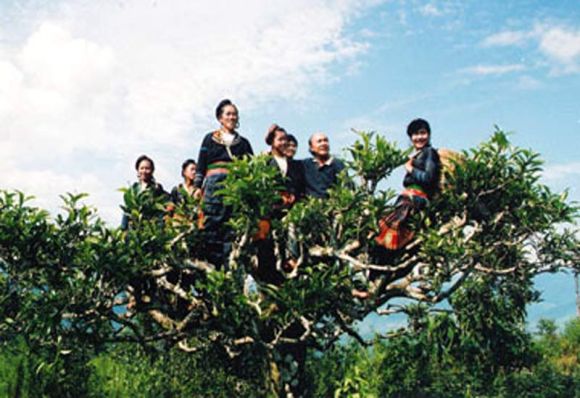
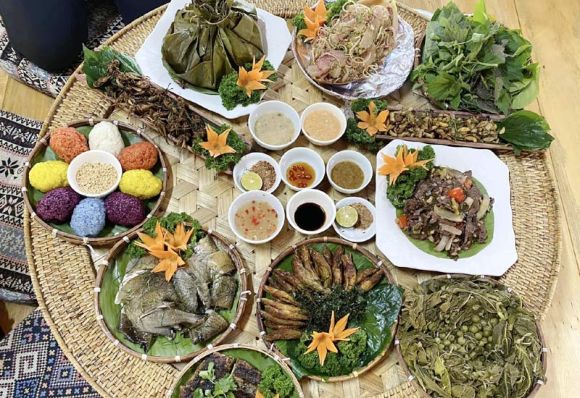
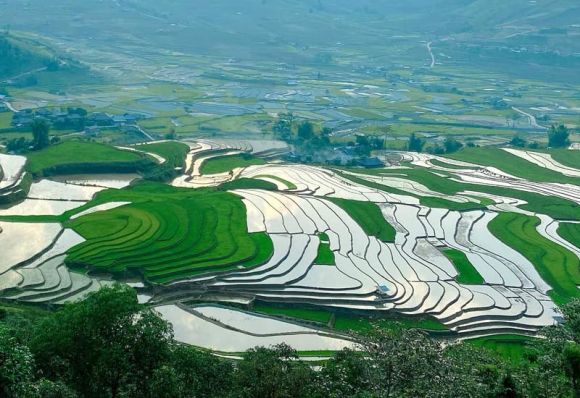
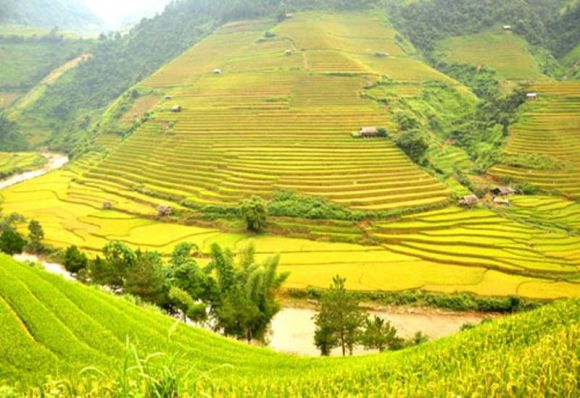
What to Eat in Yen Bai: A journey to Yen Bai is not complete without indulging in its unique culinary offerings. The dishes in Yen Bai are deeply rooted in local culture and tradition, highlighting the natural ingredients available in the mountainous region. From grilled stream fish to colorful sticky rice and savory soups, Yen Bai’s cuisine offers a range of flavors and textures that make it a memorable part of the travel experience. Whether you’re enjoying a meal at a homestay or sampling foods at a local market, these must-try dishes are sure to enrich your adventure in northern Vietnam.
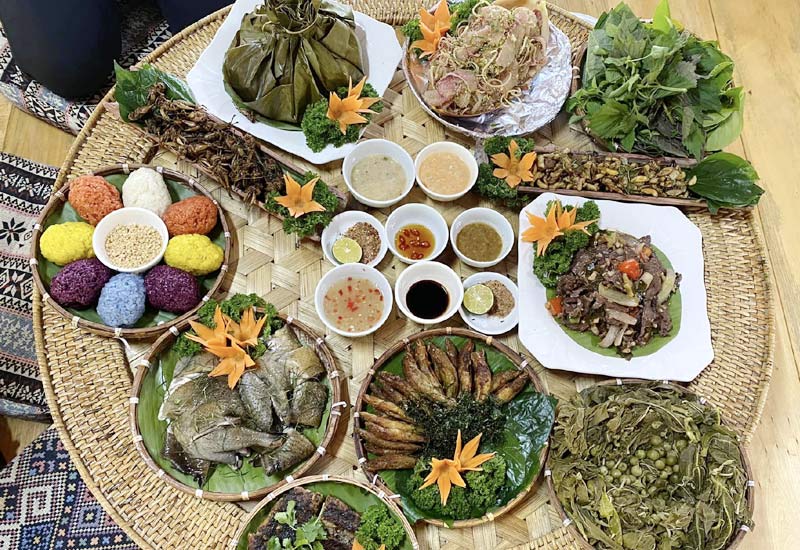
1. Xoi Ngu Sac (Five-Color Sticky Rice)
Xoi Ngu Sac, or Five-Color Sticky Rice, is a visually striking dish traditionally prepared by the Tay and Thai ethnic groups. The rice is dyed naturally using local plant extracts to create colors like red, green, yellow, purple, and white, each color symbolizing different blessings such as health, prosperity, and happiness. The sticky rice has a mildly sweet flavor and a chewy texture. The natural dyes don’t alter the taste but add a subtle earthy aroma.
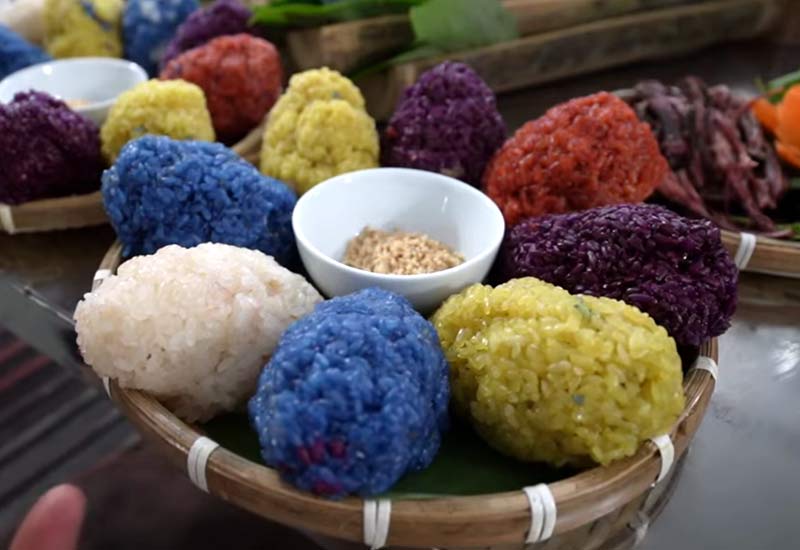
- Where to Try: Look for this dish at local markets or during cultural festivals, as it’s often prepared for special occasions.
2. Ca Nuong Pa Pinh Top (Grilled Stream Fish)
This traditional grilled fish dish is popular among the Thai people in Yen Bai. Fresh fish, typically caught from local streams, is marinated with herbs like lemongrass, lime leaves, and chili, then wrapped in banana leaves and grilled over charcoal. The fish has a smoky flavor with a blend of herbal aromas and a slight spiciness. The banana leaf helps keep the fish moist and enhances the flavor.
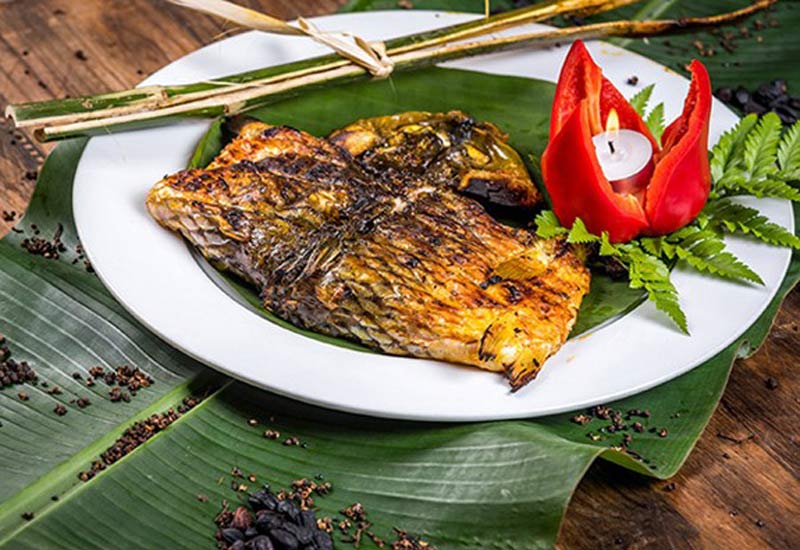
- Where to Try: Often served in Thai family gatherings or homestays in Mu Cang Chai, where it’s freshly prepared and served with rice.
3. Thang Co (Horse Meat Stew)
Thang Co is a traditional dish originally from the Hmong people, consisting of horse meat and organs cooked in a savory broth with a mix of local herbs and spices. The stew is slow-cooked in a large pot over an open fire. The dish has a rich, earthy taste with a slight bitterness from the herbs. The flavors can be intense and are appreciated by those looking for an authentic local taste.
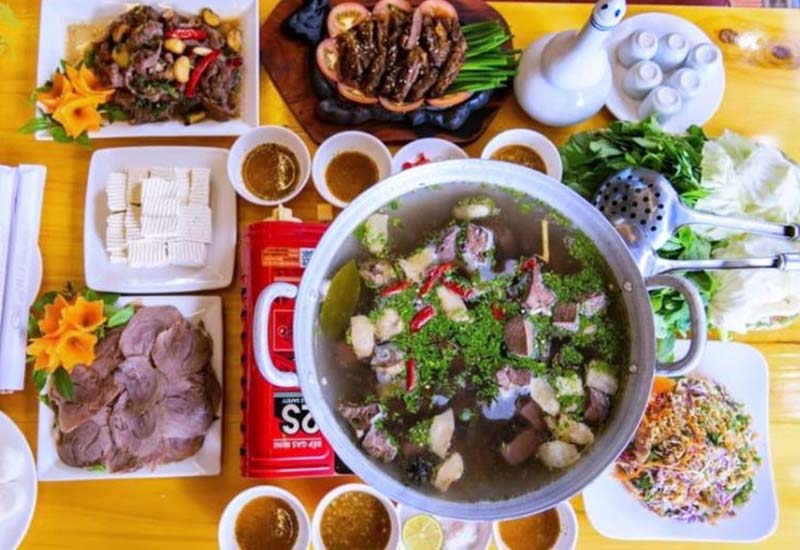
- Where to Try: Thang Co is commonly served at Hmong festivals or local markets in Mu Cang Chai and Nghia Lo, especially during special celebrations.
4. Lap Xuong (Yen Bai Sausage)
This special sausage is made with pork and seasoned with spices like pepper, garlic, and local herbs. After stuffing the meat into natural casings, the sausages are traditionally smoked, giving them a unique flavor. The sausages have a smoky, savory taste with a hint of spiciness and an herbal aroma.
- Where to Try: Lap Xuong is commonly available at markets and local restaurants in Yen Bai. You may also find variations prepared differently by different ethnic groups.
5. Banh Chung Den (Black Sticky Rice Cake)
Banh Chung Den is a type of square sticky rice cake made with black glutinous rice, often associated with the Tay people. The black color comes from the natural ash of special plants, which is believed to have health benefits. This dish is mildly sweet and has a dense, sticky texture. It’s often filled with mung beans and fatty pork, which balances the flavors with a savory contrast.
- Where to Try: Typically prepared for the Lunar New Year and other special occasions, Bánh Chưng Đen can be found in local markets or made by families during festivals.
6. Ga Doi (Hill Chicken)
Hill chickens are free-range chickens raised in the mountainous areas, giving them firmer meat and a distinct flavor. The chickens are marinated with salt, pepper, and herbs, then roasted or steamed. The meat is tender yet firm, with a savory and slightly herbal flavor. It’s often served with a dipping sauce made from salt, pepper, and lime juice.
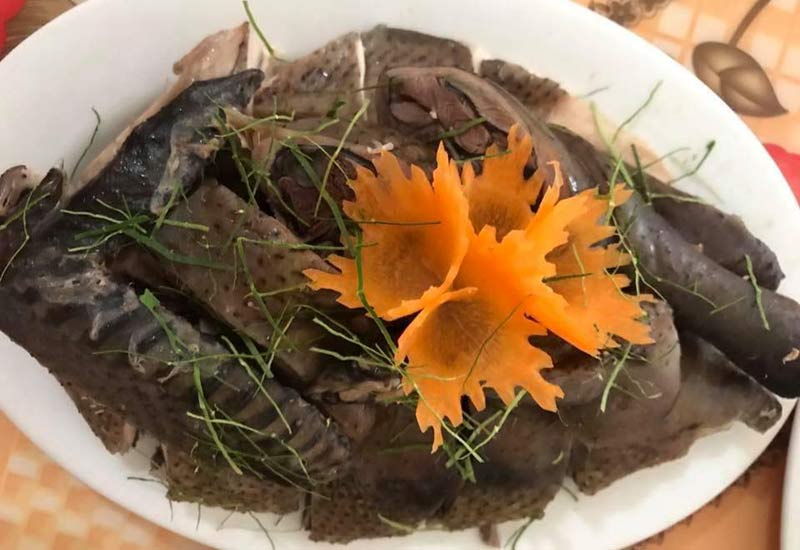
- Where to Try: Hill chicken is served in many local restaurants or homestays. It’s also a favorite at family gatherings and celebrations in Yen Bai.
7. Reu Da (Rock Moss)
Reu Đa is an unusual and nutritious dish made from edible rock moss found in rivers and streams in Yen Bai. The moss is cleaned and mixed with spices, then either fried, grilled, or cooked in soups. When grilled or fried, rock moss has a slightly crispy texture with a mild, earthy taste. It’s often seasoned with garlic, chili, and other spices to enhance the flavor.
- Where to Try: This dish is unique to mountainous regions like Yen Bai and can be found at local homestays, particularly those of the Dao and Tay people.
8. Canh Cua Suoi (Stream Crab Soup)
Canh Cua Suoi is a traditional crab soup made with freshwater crabs from local streams, often mixed with local greens and herbs. It’s a healthy, protein-rich soup served with rice or sticky rice. The soup has a fresh, slightly sweet taste from the crab, balanced with the herbal and slightly bitter flavors of the local greens.
- Where to Try: This dish is typically prepared in rural homes and is a staple meal in Yen Bai households, especially in the summer months when crabs are abundant.
9. Banh Day (White Rice Cake)
Banh Day is a traditional rice cake that’s chewy and mildly sweet. It’s made by pounding glutinous rice until it becomes a smooth, sticky dough, then shaping it into small, round cakes. The cake has a chewy texture and is often enjoyed with a sprinkle of sugar or with savory accompaniments like roasted sesame and peanuts.
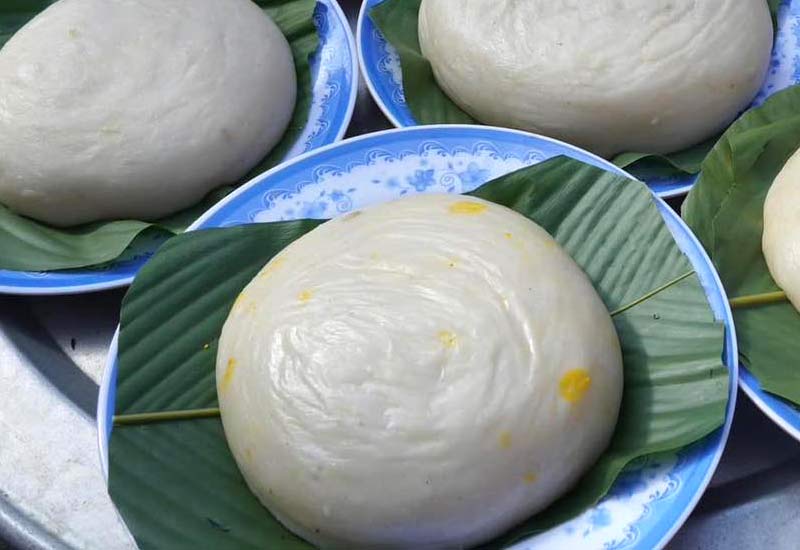
- Where to Try: This dish is often enjoyed during festivals or celebrations and can be found in local markets, usually freshly made by local vendors.
10. Pickled Bamboo Shoots
Bamboo shoots are abundant in Yen Bai and are often pickled to create Pickled Bamboo Shoots, a favorite snack and side dish in local cuisine. The shoots are soaked in a mixture of salt, water, and sometimes spices, then fermented for a few days to develop a tangy flavor. Pickled Bamboo Shoots has a sour, slightly spicy taste, which makes it an ideal accompaniment to rice and grilled meats.
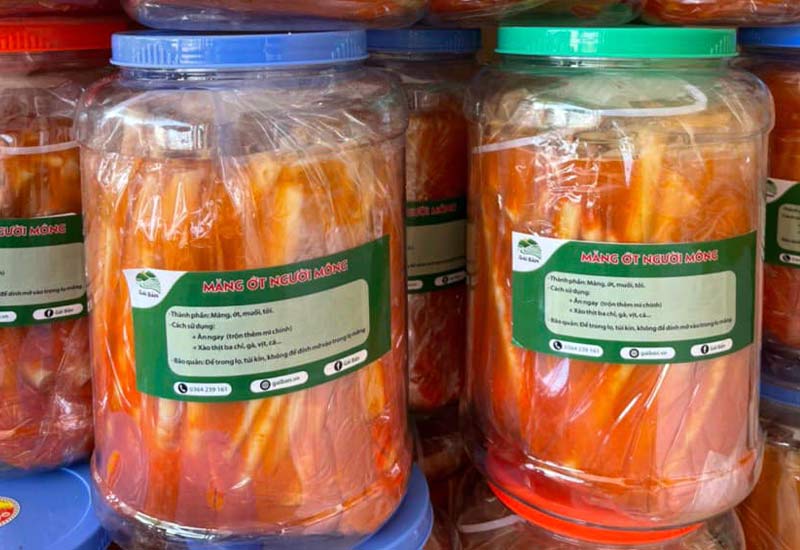
- Where to Try: Pickled Bamboo Shoots is often prepared by locals and can be found in markets or served as a side dish in homestays and traditional restaurants.
Tips for Exploring Yen Bai’s Cuisine
- Where to Eat: For the most authentic experience, visit local markets, homestays, or family-run eateries. Many dishes are only available in Yen Bai’s rural areas, so be prepared for rustic dining environments.
- Festivals: Many traditional dishes are made during festivals, such as Lunar New Year or harvest festivals. Visiting during these times allows you to sample a wider range of traditional foods.
- Trying New Flavors: Yen Bai’s cuisine is distinct, with ingredients that may be unfamiliar. Embrace the chance to try local dishes, especially those using unique ingredients like rock moss and horse meat.
- Dining Etiquette: When eating in local homes or with families, it’s respectful to wait for the host’s invitation before starting the meal. Meals are usually served with rice, and it’s customary to share dishes communally.
What to Eat in Yen Bai with Asia Eyes Travel DMC Vietnam
Discover the unique and flavorful cuisine of Yen Bai with Asia Eyes Travel DMC Vietnam. From traditional Hmong sticky rice to local grilled specialties, our Vietnam Small Group Tours let you experience the authentic tastes of northern Vietnam while exploring its stunning landscapes.