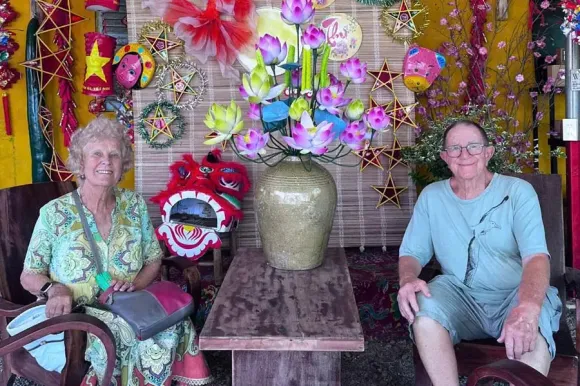
Thanh Tien Paper Flower Village sits ten kilometres downstream from Hue's Perfume River waterfront, past the last of the city's cafés and into a landscape of vegetable plots and bamboo hedges. For three centuries, families here have been making colourful paper flowers that never wilt. Thanh Tien Paper Flower Village doesn't look like a tourist attraction, and that is exactly its appeal. There is no ticket gate, no souvenir arcade - just open front rooms where families sit cross-legged on tiled floors, splitting bamboo and folding coloured paper into chrysanthemums, peonies and lotus blooms destined for household altars all over central Vietnam.
For travelers looking to experience a slower and more personal side of Hue, Thanh Tien Paper Flower Village is well worth adding to the itinerary. The Thanh Tien paper flower making experience gives visitors the chance to meet local artisans, learn how the flowers are made and try creating one by hand. Some Hue Tours include traditional craft villages like Thanh Tien, making it easy to combine local culture, hands-on activities and the peaceful countryside in one trip. Contact Asia Eyes Travel if you would like to include Thanh Tien in a private or small-group Hue itinerary. Here's what to expect and how to make the most of your visit.
Thanh Tien lies in the former Phu Mau commune, on the south bank of the lower Perfume River, roughly 10 kilometres northeast of Hue city centre and only a short hop from Sinh village, home to Hue's famous folk woodblock paintings. It's flat, green, and refreshingly quiet.
The craft was born out of practicality as much as artistry. This stretch of riverbank floods almost every year, and fresh flowers are fragile, seasonal and expensive. Paper flowers are none of those things. They're light, cheap, weather-resistant and can sit on an ancestral altar for a full year without fading. Villagers began making them more than 300 years ago, and the trade stuck: come the twelfth lunar month, nearly every household here turns into a small workshop, producing bundles of blooms for Tet.
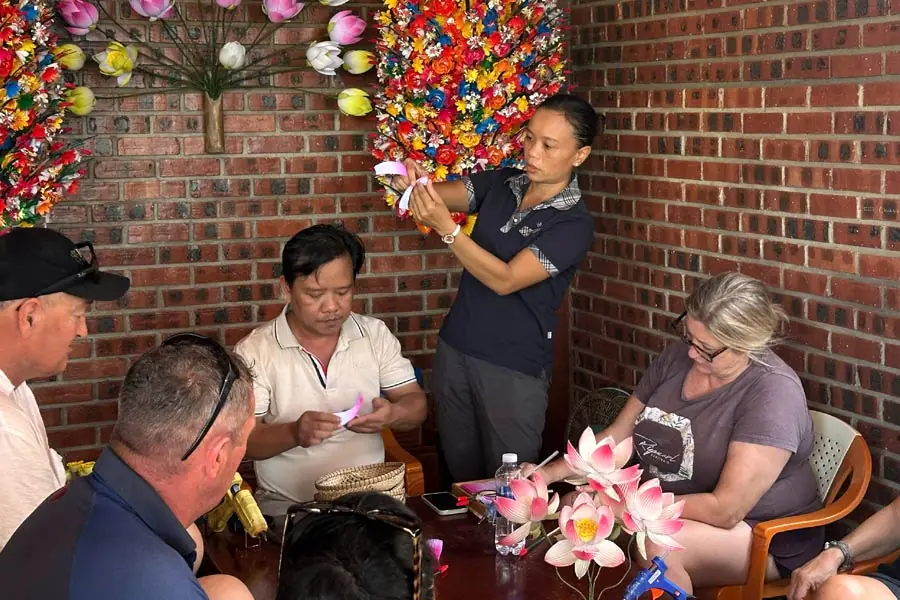
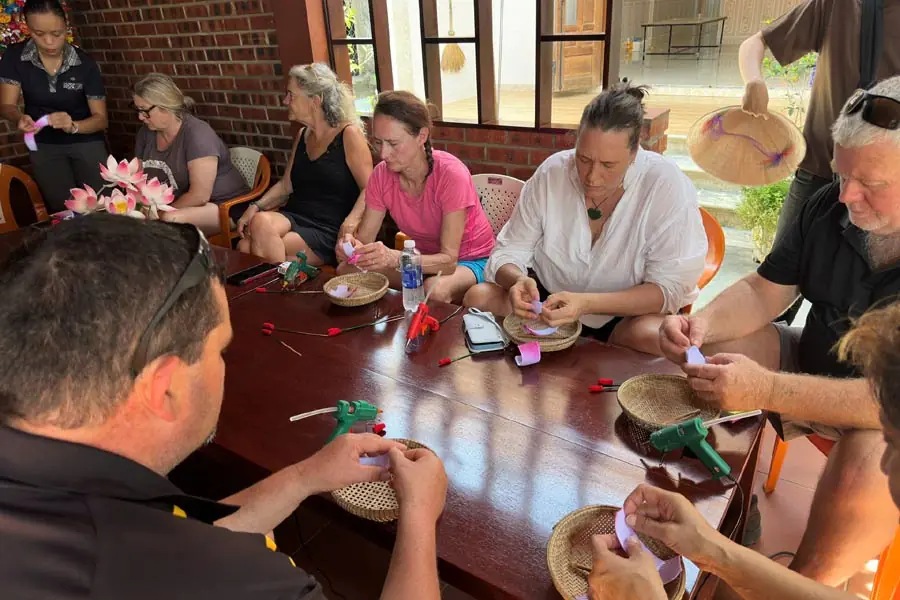
You'll usually be seated in a family's workshop, which in most cases means the shaded front room of their home, with finished flowers hanging in rows above your head like an upside-down garden.
The process starts with the stem. Bamboo is split into thin, flexible strips, trimmed and smoothed, then dried - a step artisans do in advance, though most will show you how it's done and let you try the knife work under supervision. Next comes the paper. Traditionally it was dyed at home using natural colours drawn from leaves, roots and ash; today many families use pre-coloured paper, but the older artisans still keep their dye recipes and will happily talk you through them.
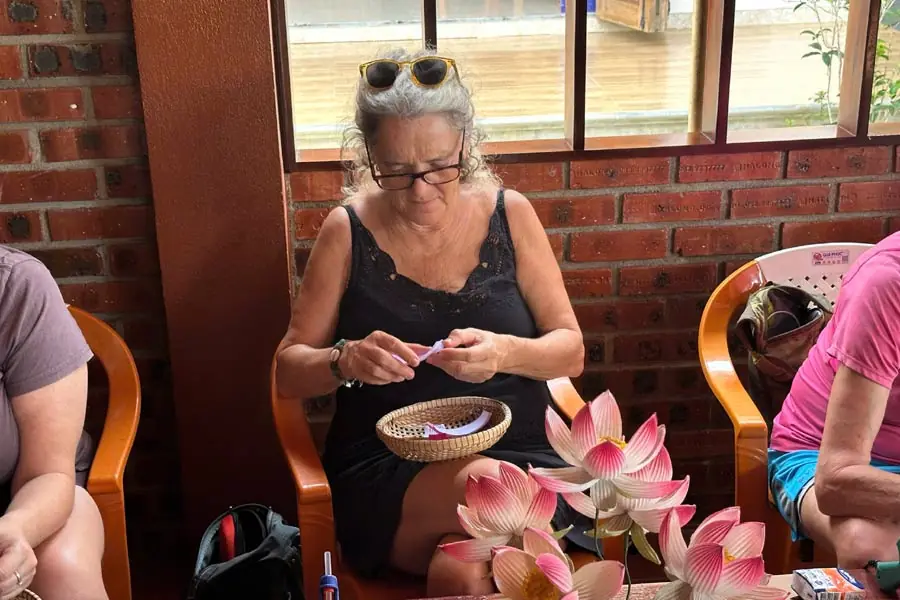
Then the part everyone comes for. You fold, score and cut sheets into petal shapes, layering them so each bloom has depth rather than looking flat. The petals are wrapped and bound to the bamboo stem with a twist of glue and thread, then eased open one by one with your fingertips. It is finicky, slightly addictive work, and it takes most visitors two or three attempts before a flower stops looking like crumpled paper and starts looking like a chrysanthemum.
Allow around 60 to 90 minutes for the hands-on part. You keep what you make, and the artisans will wrap it so it survives the flight home. Fair warning: your first flower will be noticeably worse than the one your host makes in ninety seconds flat while chatting to you. That's part of the fun.
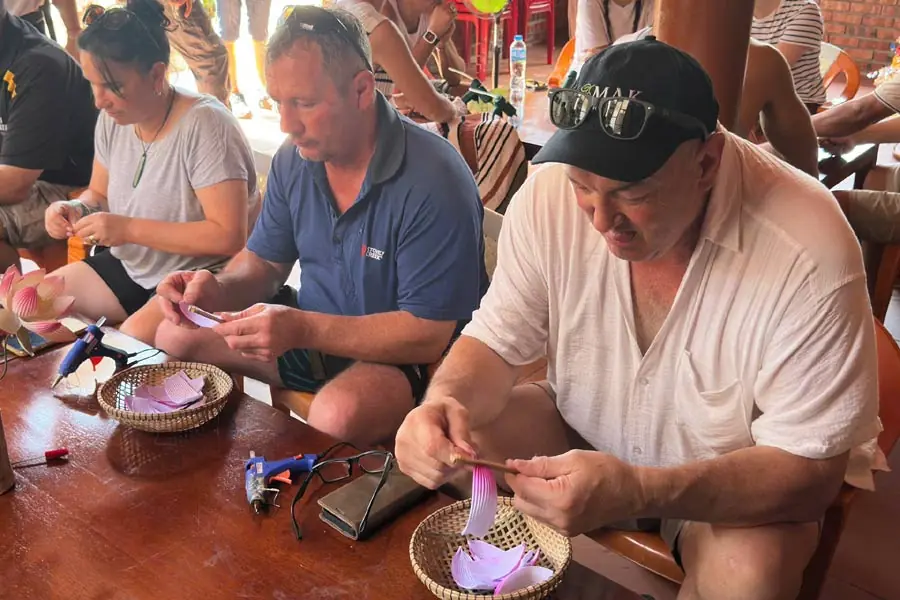
For most of its history, Thanh Tien produced only ritual flowers. The paper lotus - now the village's most recognisable product - is a relatively recent revival, brought back by local artisans in the early 2000s and quickly adopted as a symbol of Hue itself. You'll see paper lotus arrangements at Hue Festival, in ao dai fashion shows, in boutique hotel lobbies and on the shelves of design shops in the Old Quarter.
If you only have time to make one thing, ask for the lotus. It's harder than the smaller blooms, with more layers and a more demanding shape, but it's the one worth carrying home.
You can visit year-round and always find someone working, but the village has a definite high season. From roughly the eleventh lunar month through to Tet - usually late December to early February - Thanh Tien is at full tilt. Courtyards fill with drying bamboo, doorways disappear behind walls of red, yellow and purple blooms, and the whole place smells faintly of glue and dye. It's the most photogenic and most atmospheric time by far.
Outside that window, expect a calmer scene: fewer households actively producing, but more time and attention from the artisans who host visitors, which arguably makes for a better workshop. Mornings are best in any season, both for light and for temperature. Between May and August, be at the village by nine and you'll dodge the worst of the central Vietnam heat.
The village sits 20 to 25 minutes from Hue by car, though cycling the flat riverside route through Bao Vinh ancient town is far more rewarding, and arriving by boat down the Perfume River is lovelier still. Since the workshop only fills an hour or two, pair it with neighbouring Sinh village, whose woodblock folk paintings serve the same ritual purpose as the flowers. Dress lightly for floor seating and glue, and carry small cash to buy a finished bloom straight from the family.
Thanh Tien opens up when someone can translate for you. We arrange private visits that go beyond a quick photo stop: a scenic route out of Hue by car, bicycle or boat, a workshop hosted by a family who has made these flowers for generations, and a guide who explains the rituals and symbolism behind every bloom you fold.
Contact Asia Eyes Travel for personalised advice, itinerary planning and competitive rates. Our consultants will shape a private Hue Countryside Tour around your travel style, schedule and budget.
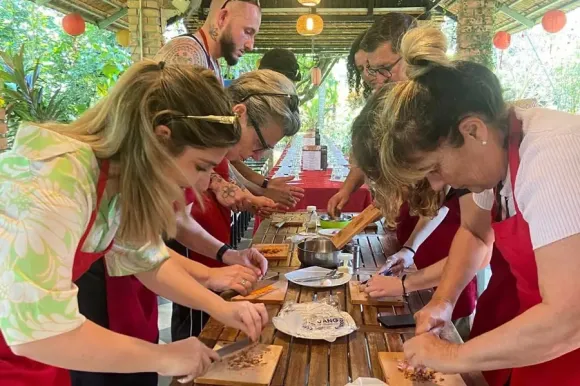
Hue Cooking Class in Thuy Bieu Village Half Day Tour