Although Angkor Wat is the most famous temple in the area, Angkor Thom, known as the “Great City,” deserves an important place in any Siem Reap itinerary. Built in the late 12th century under King Jayavarman VII, Angkor Thom became the last major capital of the Khmer Empire.
Surrounded by impressive stone walls and a broad moat, the ancient city covers almost 9 square kilometers. Inside its walls are remarkable monuments such as Bayon Temple, the Terrace of the Elephants and the Terrace of the Leper King.
More than an archaeological site, Angkor Thom offers a glimpse into the power, religious beliefs and artistic achievements of the Khmer civilization. Exploring its ancient gates, temples and stone carvings provides a deeper understanding of Cambodia's remarkable history.
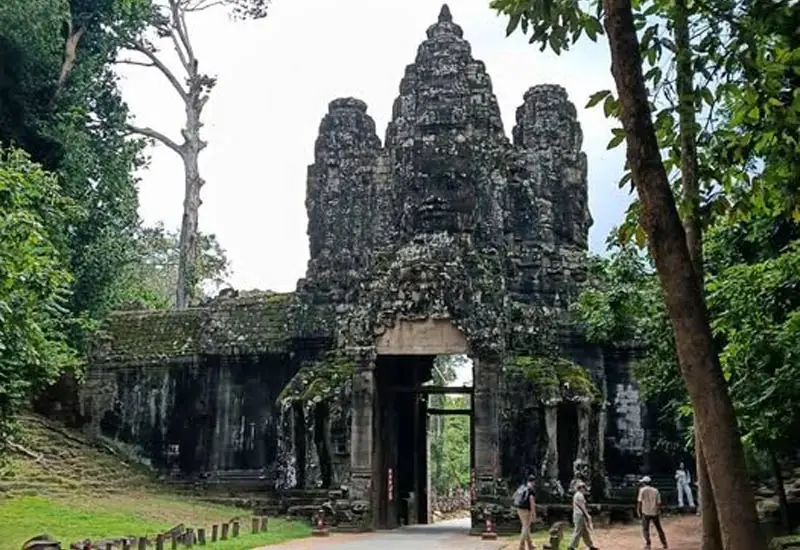
Angkor Thom was not only a political center but also a spiritual and cultural heart of the empire. Walking through its gates feels like stepping back into a time when kings ruled by divine authority and temples shaped the rhythm of daily life. Every stone, carving, and tower tells a story of power, faith, and imagination.
For travelers seeking deeper insight into Khmer civilization, Angkor Thom is a highlight of many thoughtfully designed Cambodia tours.
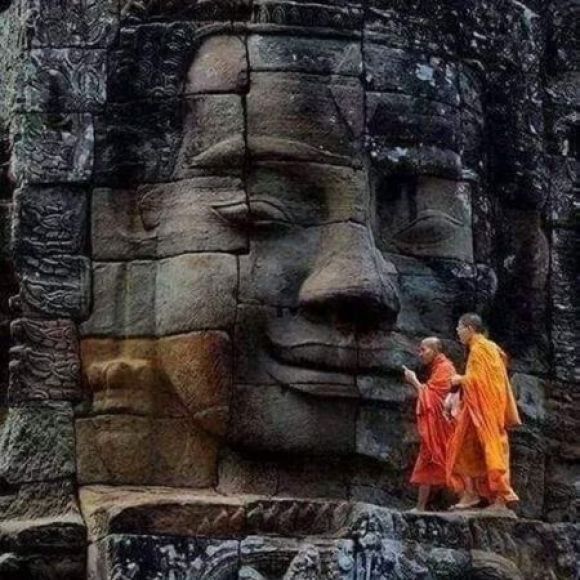
At the exact center of Angkor Thom stands Bayon Temple, the masterpiece of King Jayavarman VII. This extraordinary temple is famous for its 54 towers, each adorned with massive stone faces - more than 200 in total - gazing calmly in all directions.
Often called the “smiling faces of Cambodia,” these expressions are believed to represent Avalokiteshvara, the Bodhisattva of Compassion, as well as the divine likeness of the king himself. Walking through Bayon feels like wandering through a sacred labyrinth. Narrow corridors lead to galleries filled with intricate bas-reliefs depicting epic battles, market scenes, religious rituals, and everyday Khmer life.
Bayon is not just visually impressive - it carries a powerful spiritual presence that leaves a lasting impression on visitors.
Stretching approximately 300 meters long, the Terrace of the Elephants once served as the grand viewing platform for royal ceremonies. From here, King Jayavarman VII observed military parades, welcomed foreign envoys, and presided over festivals.
The terrace walls are richly carved with elephants, warriors, lions, and mythical Garudas, symbolizing strength and authority. As you walk along the terrace, it is easy to imagine the spectacle of elephants adorned in gold, soldiers in formation, and musicians filling the air with drums.
Today, the terrace remains one of the most evocative places in Angkor Thom, offering a vivid sense of the empire’s former splendor.
Just north of the Terrace of the Elephants lies the enigmatic Terrace of the Leper King. The site takes its name from a statue once found here, believed to represent either Yama, the Hindu god of death, or a legendary Khmer king afflicted with leprosy.
What truly sets this terrace apart is its hidden inner gallery. Behind the outer wall lies a narrow passageway lined with incredibly detailed carvings of deities, demons, dancers, and multi-headed nagas. These layered bas-reliefs create one of the most intricate and mysterious artistic spaces in Angkor Thom.
Exploring this terrace feels like uncovering a sacred secret, adding depth and intrigue to your visit.
The Baphuon Temple is one of the most impressive architectural achievements within Angkor Thom. Built in the 11th century, it was designed as a mountain temple representing Mount Meru, the sacred center of the universe in Hindu belief.
Once towering over the city, Baphuon fell into ruin over centuries. Its restoration became one of the most complex archaeological projects ever attempted, with thousands of stones carefully reassembled like a giant puzzle.
Visitors can now climb its steep terraces for panoramic views of the ancient city. On the western side, a 70-meter-long reclining Buddha was added during the temple’s Buddhist transformation, symbolizing the evolution of Khmer spirituality over time.
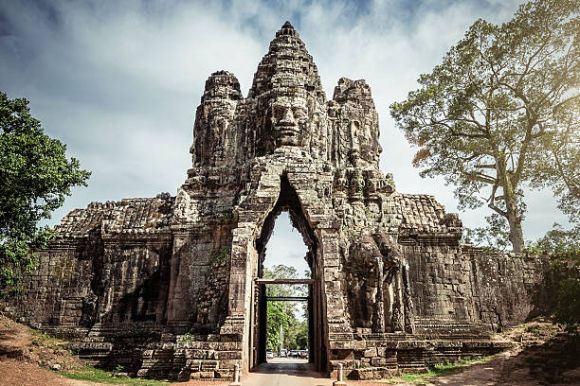
Angkor Thom is accessed through five monumental gates, each crowned with four serene stone faces. Approaching these gates is one of the most memorable experiences in Angkor.
On either side of the causeway, giant statues of gods and demons line the bridge, pulling on the body of a naga serpent in a dramatic depiction of the Churning of the Ocean of Milk, a central Hindu myth symbolizing the struggle between good and evil.
The South Gate is the most famous and best preserved, but each gate offers a unique atmosphere. Passing through them feels like crossing into a world frozen in time.
Angkor Thom represents a pivotal moment in Cambodian history. It reflects the transition from Hinduism to Mahayana Buddhism, embodied in its temples, iconography, and city planning.
More than a former capital, Angkor Thom is a spiritual landscape where politics, religion, and art were inseparable. Exploring it provides invaluable insight into the identity and resilience of Khmer civilization.
Angkor Thom is a must-see destination on any Siem Reap itinerary. Built by King Jayavarman VII in the late 12th century, this ancient walled city reflects the power and artistry of the Khmer Empire. Explore its monumental South Gate, Bayon Temple and intricate stone carvings while discovering Cambodia's fascinating history.
Contact Asia Eyes Travel for a personalized itinerary, the latest tour prices and special offers.
A Journey Through Vietnam and Cambodia 16 Days

Best Vietnam and Cambodia Package 14 Days
Vietnam and Cambodia Heritage Journey 12 Days
Explore Thailand, Laos, Vietnam and Cambodia in 23 Days
Mystic Angkor & Beautiful South Cambodia 10 Days
18-Day Thailand, Cambodia, and Vietnam Tour Package