


Thanh Toan Bridge
History, Countryside & Local Life
- Home /
- Blog /
- Vietnam Travel Guide /
- Hue City, Vietnam /
- Thanh Toan Bridge
Thanh Toan Bridge is one of the most charming historical landmarks near Hue, Vietnam. Built in 1776, this traditional wooden bridge is known for its distinctive tiled roof, seven sections, and close connection with local village life. Located about 7–8 kilometers southeast of central Hue, the bridge offers a different experience from the Imperial City and Nguyen Dynasty royal tombs. Visitors can combine a visit to Thanh Toan Bridge with a peaceful walk through rice fields, a local market, and nearby rural attractions. For travelers looking beyond the major historical sites, it is a worthwhile stop on Hue tours and Hue Countryside Tours, with Asia Eyes Travel offering local experiences and practical advice. Contact us to plan a countryside experience that fits your Hue itinerary.
Thanh Toan Bridge was built in 1776 during the reign of King Le Hien Tong. The bridge was funded by Tran Thi Dao, a local woman who used her own money to provide villagers with a safer crossing over the canal. She was later honored for her contribution, and an altar dedicated to her remains inside the bridge. Over the centuries, the structure has been restored several times after damage from weather and historical events. Today, Thanh Toan Bridge remains an important example of Hue’s traditional village heritage.
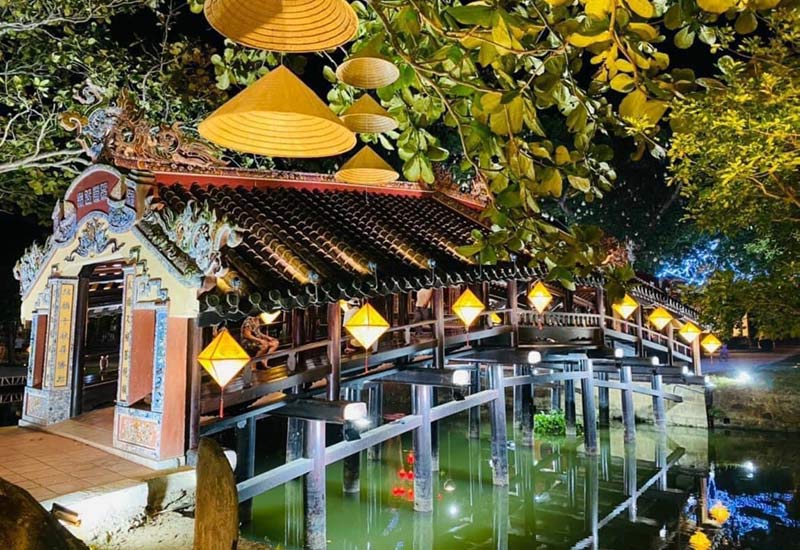
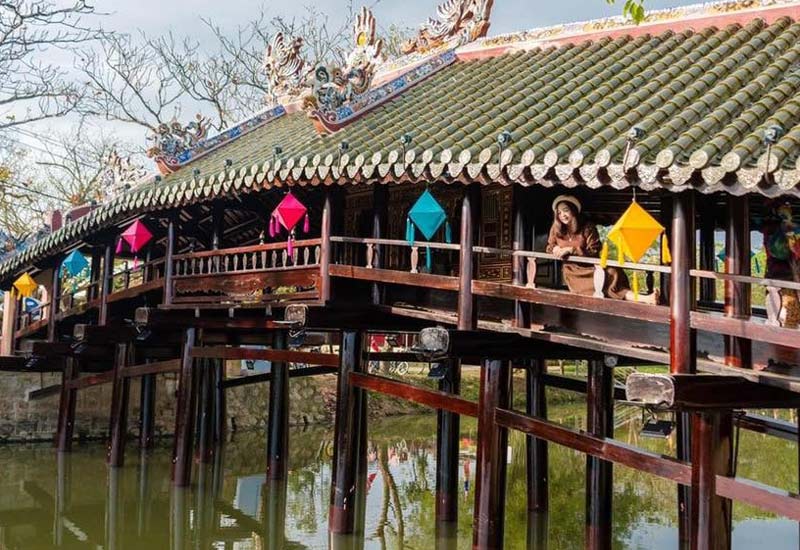
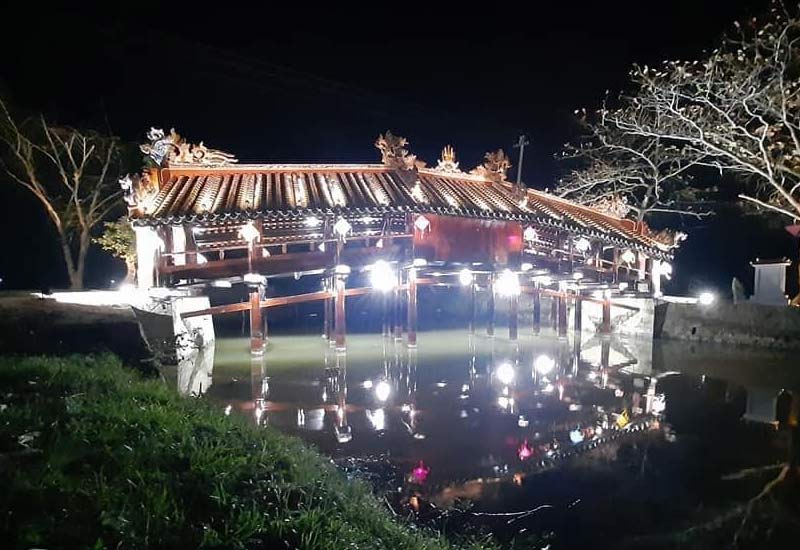
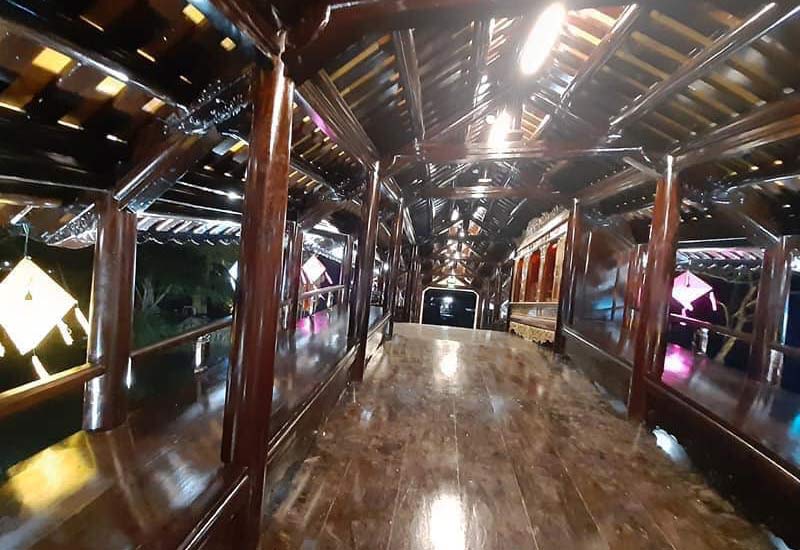
Thanh Toan Bridge is famous for its traditional “house above, bridge below” design. The wooden bridge is covered by a tiled roof, providing shade and shelter for people crossing or resting. Around 17–18 meters long, it consists of seven sections with wooden platforms and railings. An altar dedicated to Tran Thi Dao is located inside the bridge. The surrounding landscape adds to its appeal, with the Nhu Y River, rice fields, canals, gardens, and traditional houses creating a peaceful countryside setting away from central Hue City.
Thanh Toan Bridge can be combined with several local experiences. The nearby village market is particularly interesting in the morning, when residents buy and sell fresh produce and everyday goods. Visitors can also learn about traditional farming through displays of agricultural tools and local activities. Cycling through the surrounding countryside is another popular option, with quiet roads passing rice fields and villages. For international travelers, this combination of rural scenery and everyday local life provides a different perspective on Hue beyond the Imperial City and royal tombs.
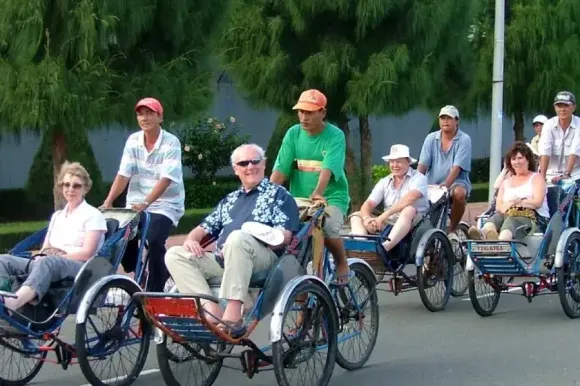
The best time to visit Thanh Toan Bridge is generally in the morning, when the local market is active and temperatures are more comfortable for walking or cycling. Allowing a few hours makes it possible to explore the bridge, village, market, and surrounding countryside without rushing. Travelers can combine the visit with the Imperial City, Khai Dinh Tomb, Tu Duc Tomb, or a Hue food experience. A Hue City Tour, countryside cycling trip, food tour, or scooter tour can each provide a different way to explore the area.
Explore Hue’s historic landmarks and peaceful countryside with Asia Eyes Travel DMC Vietnam. Our Hue City Tours can combine major attractions with local experiences around Thanh Toan Bridge, including countryside exploration, food tours, and scooter tours. Contact us for more information about our Hue tours, Hue Countryside Tours, food tours, and scooter tours in Hue City.
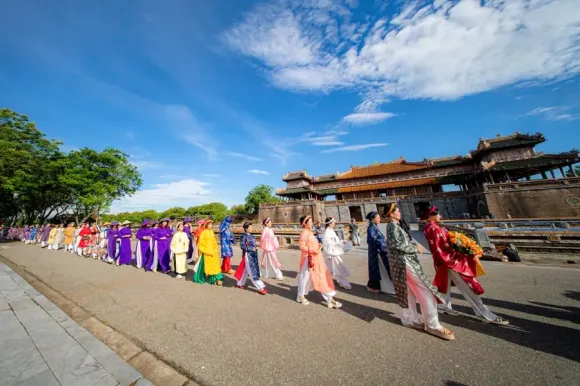
Discover Hue with Ao Dai Experience
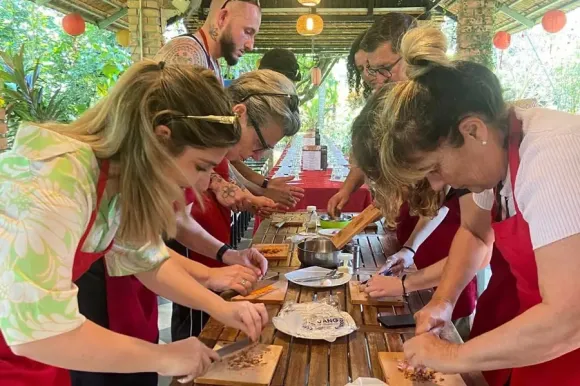
Hue Cooking Class in Thuy Bieu Village Half Day Tour