Khai Dinh Tomb

Khai Dinh Tomb is one of the most impressive royal tombs in Hue, Vietnam. Built for Emperor Khai Dinh, the 12th emperor of the Nguyen Dynasty, the tomb is famous for its elaborate architecture, intricate mosaics, and unique combination of Vietnamese, Asian, and European influences. Located on Chau Chu Mountain, around 10 kilometers from central Hue City, it is one of the most interesting historical attractions to visit in Hue.

History of Khai Dinh Tomb

Construction of Khai Dinh Tomb began in 1920 and continued for more than a decade, with the tomb completed in 1931 during the reign of Emperor Bao Dai. Compared with other Nguyen Dynasty royal tombs, Khai Dinh Tomb is much smaller in area but highly detailed in its architectural design and decoration.

Emperor Khai Dinh commissioned the tomb during his reign, and its construction reflected the artistic influences of the early 20th century. The site combines traditional Vietnamese royal architecture with elements inspired by French and European design.

Architecture of Khai Dinh Tomb

One of the most remarkable features of Khai Dinh Tomb is its elaborate decoration. The tomb complex is built on a steep hillside, with stone stairways leading visitors through several levels.

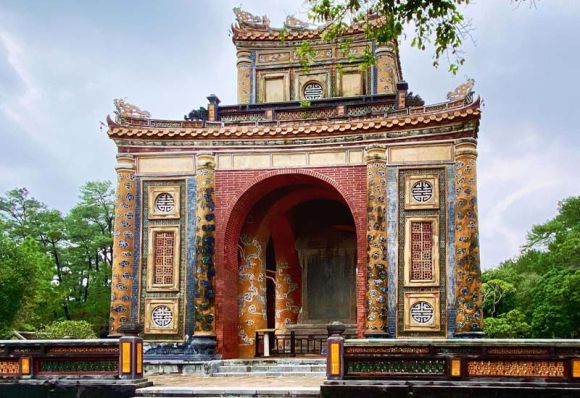
The Thien Dinh Palace is the highlight of the complex. Inside, visitors can admire colorful glass and ceramic mosaics covering the walls and ceilings. Intricate images of dragons, clouds, flowers, and other traditional motifs demonstrate the exceptional craftsmanship of the period.

The tomb also features a bronze statue of Emperor Khai Dinh and an altar area dedicated to the emperor. The combination of dark stone, colorful mosaics, and European-inspired details gives the tomb a distinctive appearance unlike other royal tombs in Hue.

Best Time to Visit Khai Dinh Tomb

The best time to visit Khai Dinh Tomb in Hue is from February to August, when the weather is generally suitable for sightseeing. February to April is particularly pleasant, with milder temperatures and less intense heat.

For a more comfortable experience, arrive in the early morning or late afternoon to avoid the strongest midday sun and enjoy better conditions for photography. The tomb has many stairs and outdoor areas, so comfortable shoes, sun protection, and drinking water are recommended.

From September to October, Hue can experience more rain and occasional storms, which may make outdoor sightseeing less convenient. However, Khai Dinh Tomb can still be visited on dry days.

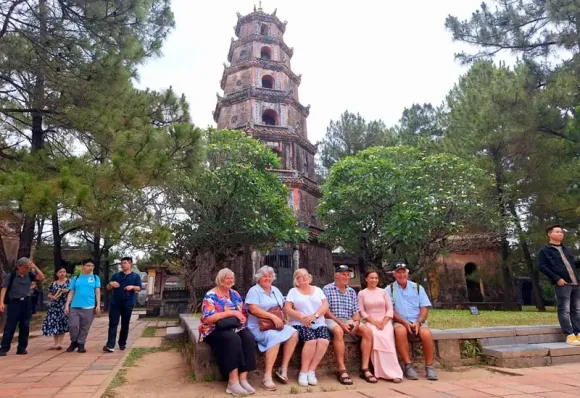
For a more complete experience, consider combining Khai Dinh Tomb with the Hue Imperial City, Thien Mu Pagoda, and Tu Duc Tomb on a full-day Hue sightseeing tour.

Check Hue City Tours with Asia Eyes Travel

Discover the history, culture, and architectural beauty of Hue City, including the impressive Khai Dinh Tomb, with Asia Eyes Travel DMC Vietnam. Our Hue City Tours include food tours, scooter tours, and sightseeing experiences, combining major historical landmarks with local insights, scenic views, and authentic local experiences.

Contact us for more information about our Hue tours, food tours, and scooter tours in Hue City.

Hue City Tours | Best Tours & Things to Do in Hue

Related Posts

Hue Travel Experiences

Hue Travel Experiences offer more than sightseeing. As the former imperial capital of Vietnam, Hue allows travelers to discover the country’s royal history, traditional culture, local cuisine, spiritual heritage, and peaceful countryside. Our tours in Hue are designed to help travelers experience the city beyond its famous landmarks. From exploring the Hue Imperial City and royal tombs to enjoying local food, cycling through villages, and cruising along the Perfume River, Hue offers a variety of memorable experiences for couples, families, seniors, and cultural travelers.
Read more

Hue Travel Tips

Planning a trip to Hue, Vietnam? These practical Hue travel tips will help you plan a memorable trip and make the most of your time in Vietnam's former imperial capital. Located in Central Vietnam, Hue is renowned for its Imperial City, Nguyen Dynasty royal tombs, ancient pagodas, Perfume River, traditional cuisine, and rich cultural heritage. Hue is an ideal destination for travelers interested in history and culture tours. From exploring the UNESCO-listed Imperial City to visiting royal tombs and historic temples, you can discover the fascinating legacy of the Nguyen Dynasty and learn more about Vietnam's traditional culture.  Whether you are planning for your Hue city tours, private culture tour, day trip, or multi-day Central Vietnam itinerary, these travel tips cover Hue Travel Guide, how to get around, what to see and eat, and useful advice for first-time visitors.
Read more

Top 10 Attractions in Hue

Hue is a city rich in stories, where layers of history unfold along the Perfume River and across forested hills. As the former feudal capital of the Nguyen Dynasty, Hue is home to imperial citadels, royal tombs, ancient pagodas, and traditional garden houses, each reflecting a refined and spiritual way of life. Exploring these landmarks is at the heart of meaningful Hue City Tours, offering insight into Vietnam’s royal past beyond the surface. With thoughtfully designed itineraries by Asia Eyes Travel DMC Vietnam, travelers can discover the city’s most iconic sites while connecting deeply with its heritage. Here are the top 10 attractions in Hue you shouldn’t miss.
Read more

Best Food in Hue You Should Not Miss

Hue is widely regarded as one of Vietnam's greatest culinary destinations, where centuries of imperial history have shaped a rich and distinctive food culture. From elegant royal dishes once served to the Nguyen Emperors to authentic street food enjoyed by local families, every dish reflects Hue's unique traditions, flavours, and cultural heritage. Many travelers visit Hue not only to explore its UNESCO World Heritage sites but also to discover its remarkable cuisine. This guide by Asia Eyes Travel introduces the best food in Hue, featuring must-try local specialties and practical dining tips for an unforgettable culinary journey. Many  Hue City Tours include an authentic Hue Street Food Tour, allowing travelers to taste iconic dishes, explore vibrant local markets, and discover hidden family-run restaurants. Whether you are interested in history, culture, or food experiences, Hue's unique cuisine is an essential part of any visit to Central Vietnam.
Read more

Best Time to Visit Hue city

Hue is a city where Vietnam's imperial history, royal architecture, and timeless traditions come together to create one of the country's most rewarding cultural destinations. Home to the UNESCO-listed Imperial City, magnificent royal tombs, ancient pagodas, and the peaceful Perfume River, Hue offers memorable experiences throughout the year. The best time to visit Hue is generally from February to April, when pleasant temperatures and relatively low rainfall make sightseeing especially enjoyable. If you're planning to join Hue Tours, understanding the seasonal weather will help you choose the right travel dates. In this guide, Asia Eyes Travel shares practical local insights to help you experience Vietnam's former imperial capital at its very best.
Read more

Tomb of Emperor Tu Duc, Hue City

The Tomb of Emperor Tu Duc is one of the most beautiful and peaceful royal tombs in Hue, Vietnam. Surrounded by pine trees, lakes, gardens, and traditional Vietnamese architecture, the tomb reflects the personality, interests, and poetic spirit of Emperor Tu Duc, the fourth emperor of the Nguyen Dynasty. Located in a quiet area outside central Hue, Tu Duc Tomb is an important historical and cultural attraction and a popular stop on Hue sightseeing tours.
Read more
share
CHAT WITH US