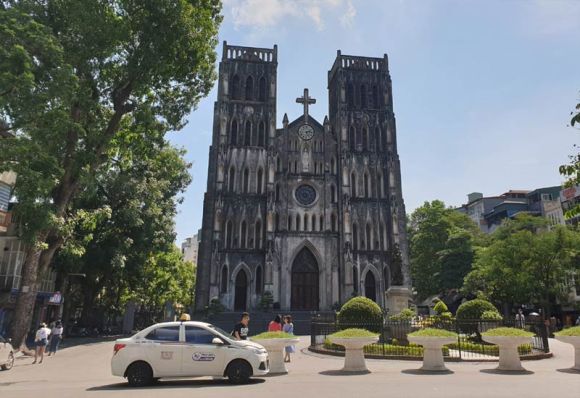
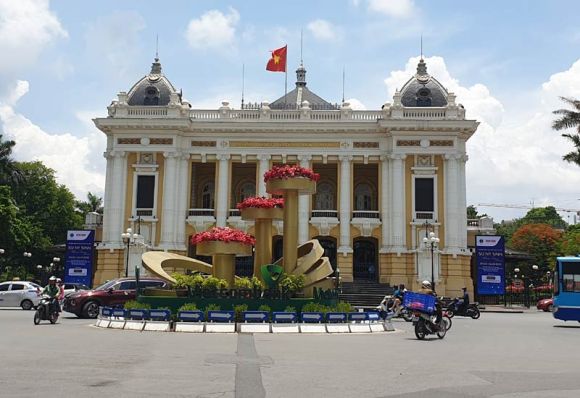
Hanoi Old Quarter is a must-visit destination for food lovers, offering a rich mix of traditional Vietnamese dishes, vibrant street food stalls, and generations-old culinary traditions. From steaming bowls of pho and grilled bun cha to crispy banh mi and authentic Vietnamese coffee, the neighborhood brings Hanoi’s food culture to life through its flavors and everyday dining experiences. This guide explores why the Old Quarter attracts food enthusiasts from around the world and which local specialties you should try. Asia Eyes Travel DMC Vietnam can help you experience the city’s culinary heritage through local food tours. Contact us to plan your Hanoi street food experience.
The Old Quarter’s food culture reflects Hanoi’s long history as a center of trade, craftsmanship, and urban life. Different streets have developed their own commercial identities, while generations of cooks and vendors have helped preserve local recipes. Traditional dishes remain part of everyday life, served in modest restaurants and small family businesses rather than only in formal dining rooms. This connection between food and local history gives visitors a chance to experience Vietnamese culinary traditions in their original social setting, where familiar flavors remain closely tied to the rhythms of the neighborhood.
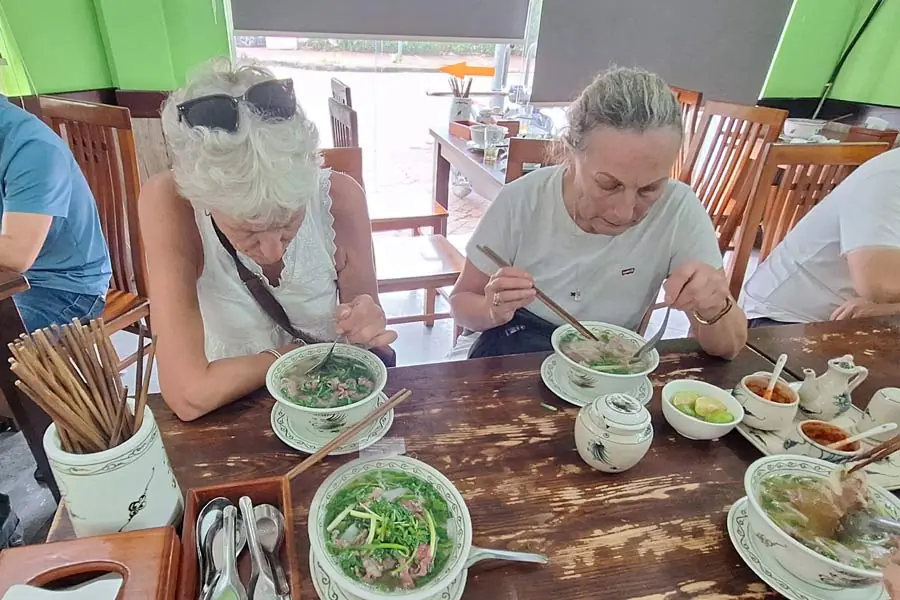
Few dishes represent Hanoi as clearly as pho and bun cha. Pho features rice noodles in an aromatic broth with beef or chicken, offering a comforting meal commonly enjoyed at breakfast. Bun cha combines grilled pork, rice vermicelli, fresh herbs, and a savory dipping sauce, creating a balance of smoky, sweet, and fresh flavors. Both dishes demonstrate the attention to balance that characterizes much of Northern Vietnamese cooking. For first-time visitors, trying these local favorites is an accessible way to understand why Hanoi has become a destination of interest for food lovers.
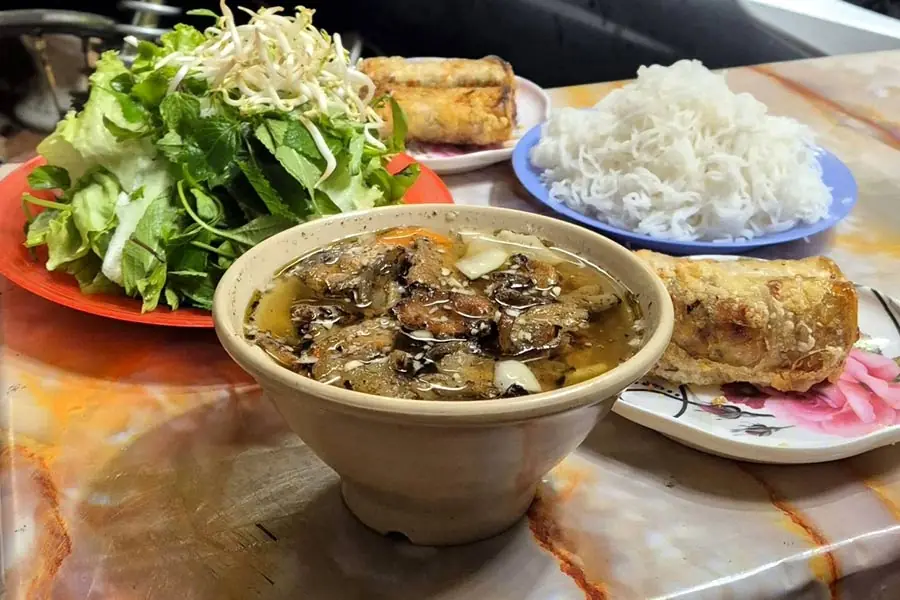
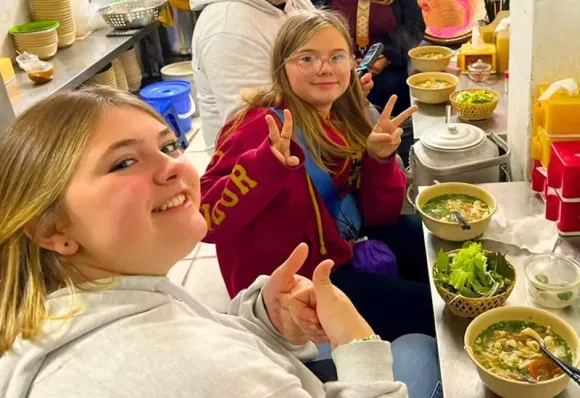
Street food is central to the Old Quarter’s culinary identity. Vendors prepare dishes in compact spaces, serve customers at small tables, and often specialize in just a few items. Visitors may encounter banh mi sandwiches, steamed banh cuon rice rolls, sticky rice, fried spring rolls, and seasonal snacks while walking through the neighborhood. The appeal comes from the combination of freshly prepared food, informal service, and the chance to observe local dining habits up close. Rather than treating street food as a separate attraction, travelers can see how it forms a natural part of everyday life in Hanoi.
In the Old Quarter, eating is often a social experience that extends beyond the food itself. Small plastic stools, compact tables, and busy sidewalks create an informal atmosphere where friends gather for meals and neighbors stop for a quick bite. This style of dining may feel unfamiliar to visitors accustomed to spacious restaurants, but it offers a closer look at how many Hanoians enjoy their food. Observing the pace of a busy eatery, watching dishes being prepared, and sharing a meal in a lively street setting can become as memorable as the flavors on the plate.
Although traditional eateries remain a defining feature, the Old Quarter’s dining scene continues to evolve. Contemporary cafes, international restaurants, creative dessert shops, and modern Vietnamese dining venues sit alongside long-established food businesses. This variety allows visitors to explore different styles of eating within a relatively compact area. Travelers can begin the day with a traditional noodle soup, stop for Vietnamese coffee in the afternoon, and finish with a relaxed dinner. The mix of old and new helps the neighborhood appeal to different tastes while keeping its local culinary traditions visible.
A culinary journey through the Old Quarter would be incomplete without experiencing Hanoi’s coffee culture. Traditional cafes serve ca phe sua da, Vietnamese iced coffee with condensed milk, and ca phe den da, black iced coffee. Visitors can also try ca phe trung, or egg coffee, a Hanoi specialty topped with a rich, creamy mixture. For dessert, che offers a range of sweet dishes made with ingredients such as beans, fruit, coconut milk, and jelly. These drinks and treats provide a slower, more relaxed way to enjoy the neighborhood between food stops.
The Old Quarter appeals to international travelers because it combines culinary variety with an immersive cultural setting. Many local specialties can be sampled within walking distance, making it possible to try several dishes in one outing. The neighborhood also encourages visitors to look beyond restaurant menus and notice the details of daily food culture, from market ingredients to traditional preparation methods. For travelers willing to try unfamiliar flavors, ask questions, and explore side streets, the experience offers a deeper understanding of Hanoi than simply visiting a list of restaurants.
Exploring Hanoi Old Quarter with a local guide can help you discover traditional dishes, understand Vietnamese dining customs, and find local eateries that you might otherwise miss. Asia Eyes Travel DMC Vietnam offers Hanoi street food tours and other Hanoi tours, combining authentic local flavors with cultural experiences. Contact us to plan your culinary journey in Hanoi. For bookings and further information, contact us via WhatsApp at +84 935 946 688 (Mr. Thuc Nguyen) or email info@asiaeyestravel.com .
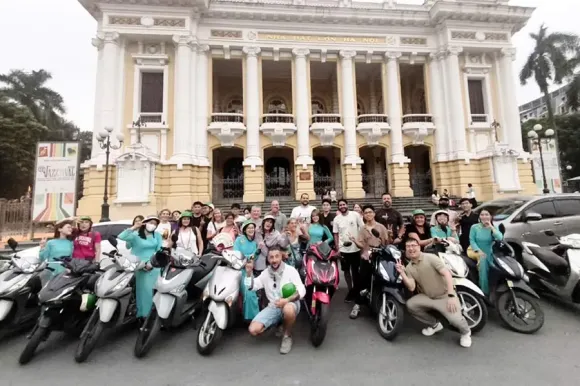
Hanoi Night Lights and Food Tour by Scooter with Female Drivers
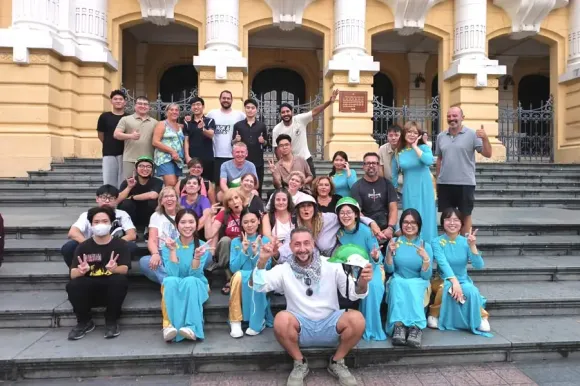
Hanoi Fabulous Food and Sights Tour by Scooter
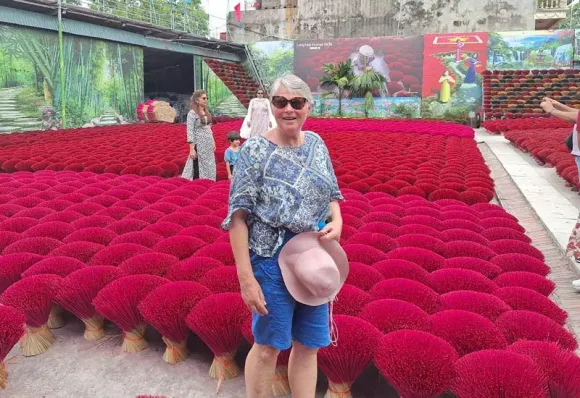
Hanoi Rural Craft Villages Tour