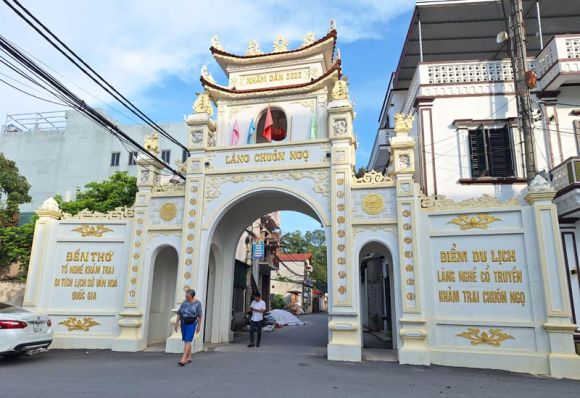
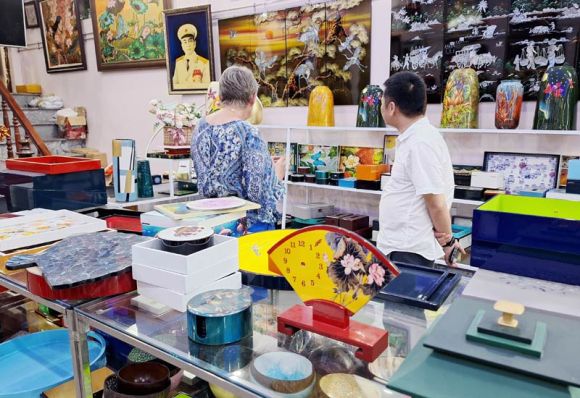
Chang Son Fan Village is located in Tay Phuong Commune, Hanoi, approximately 30 km west of Hoan Kiem Lake. The journey from central Hanoi takes around 45–60 minutes by road, depending on traffic. Surrounded by peaceful rice fields and traditional villages, Chang Son Fan Village offers a relaxing escape from the city's bustling streets. A convenient landmark is Tay Phuong Pagoda, where a local road opposite the entrance leads directly into the village.
Recognized as one of Hanoi's best-preserved traditional craft villages, Chang Son Fan Village has been producing handcrafted paper fans for centuries. Visitors can meet skilled artisans, observe the traditional fan-making process, and join hands-on workshops to create their own paper fan. Frequently included in Hanoi Countryside Tours, the village offers an authentic insight into Vietnamese craftsmanship and rural life. Asia Eyes Travel recommends Chang Son Fan Village for travelers interested in traditional handicrafts, local culture, and immersive experiences. This guide covers the village's history, top attractions, the fan-making process, and essential travel tips for your visit.
Chang Son Fan Village has a history spanning several centuries and is widely recognised as one of Hanoi's traditional craft villages. Local artisans originally made paper fans for everyday use during Vietnam's hot summers, but the craft gradually expanded to include decorative fans for temples, festivals, traditional performances, and cultural events. Today, many families continue preserving the techniques passed down through generations, with much of the production still completed by hand. The village remains an important destination for visitors interested in Vietnam's traditional handicrafts and cultural heritage.
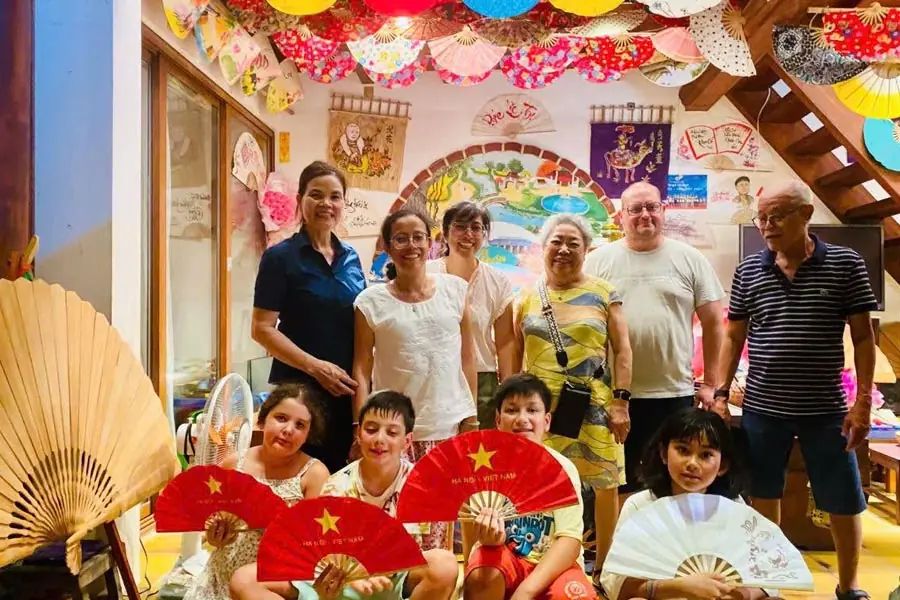
Although Chang Son Fan Village is small, it offers a variety of authentic cultural experiences beyond its famous handcrafted paper fans. From meeting local artisans and joining traditional fan-making workshops to exploring peaceful village lanes and learning about centuries-old craftsmanship, visitors can enjoy a fascinating glimpse into rural life and one of Hanoi's most treasured craft villages.
Under an artisan's guidance you can assemble and decorate a small fan yourself - mounting the paper, then painting or brushing it. It takes around 30 to 45 minutes, the artisans are patient with beginners, and you leave with a souvenir that nobody else owns.
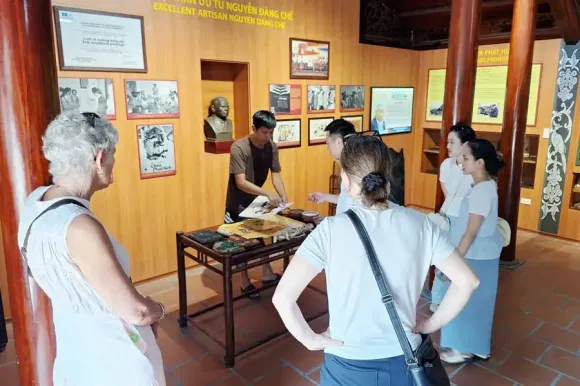
One of the most rewarding experiences in Chang Son Fan Village is meeting the local artisans who continue this centuries-old craft. Many are happy to demonstrate traditional techniques, explain how each paper fan is made, and share stories about their family's craft. Although English is limited, a translation app and a friendly smile are often enough to make the experience enjoyable and memorable.
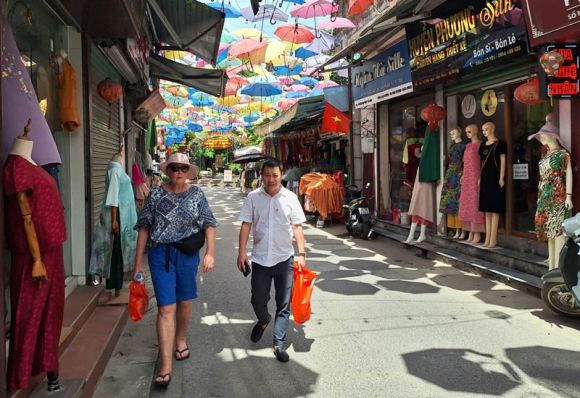
Come between roughly 9am and noon on a dry day, when the fans are out and the light is clean. The narrow brick alleys, tiled roofs and blocks of colour make this one of the most photogenic craft villages in northern Vietnam. Always ask before photographing people at work; permission is almost always given.
Prices run from a couple of dollars for a simple paper fan to considerably more for large carved or embroidered pieces. They are light, flat and almost impossible to break in a suitcase - genuinely one of the best souvenirs to carry out of Vietnam. Buying direct from the workshop means the money stays with the maker.
Artisans select bamboo by three rules: mature, flexible and completely free of termites. The cut poles are then submerged in water for four to five months. It sounds excessive, but the long soak is what gives the ribs their spring and stops them cracking or warping in humid weather years later. Nothing in the process is rushed, and this first step sets the pace for everything that follows.
Once cured, the bamboo is split into paper-thin ribs and shaved smooth by hand. Higher-end orders get carved ribs, with fine patterns cut into each individual slat - slow, exacting work done with a small blade and no machinery. The finished ribs are pinned together at the pivot and fanned into an even arc, a step that decides whether the fan will open cleanly for decades.
The arc of ribs is then covered with do paper or fabric. This is the stage that separates skilled hands from beginners: the sheet must be pressed on without a single wrinkle or bubble, and the glue must hold at the folds without stiffening them. Get it wrong and the fan will never close flat. Get it right and the paper moves like it grew there.
Decoration is where each workshop shows its personality. Artisans paint rural landscapes, lotus flowers and village scenes, brush calligraphy across the paper, or pierce thousands of tiny holes to form patterns that glow when held to the light. Fabric fans are embroidered directly or sealed with embroidery pressed between two layers of silk - often the most expensive pieces in the workshop.
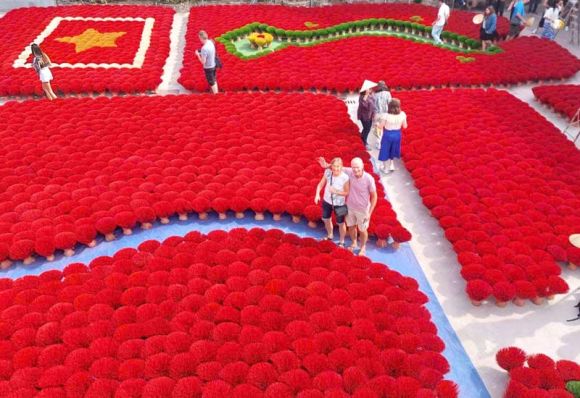
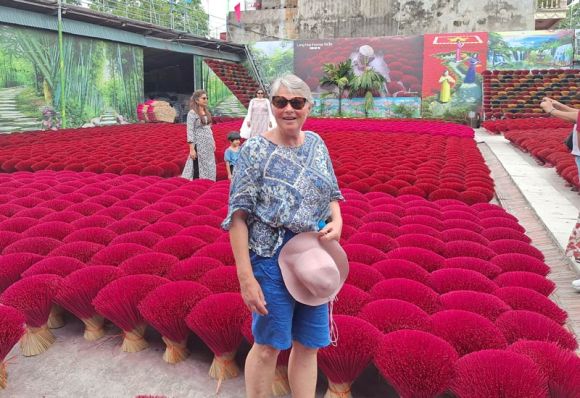
The final stage is the one photographers come for. Finished fans are set out to dry wherever there is sun: on bamboo poles, on racks, across courtyards, propped in rows down the narrow alleys. On a bright day the whole village turns into blocks of red, gold and indigo. It lasts only as long as the sunshine, so morning visits pay off.
Located around 30 km west of central Hanoi, Chang Son Fan Village can be reached in 45–60 minutes by car. Booking a Grab or private car is the easiest option for independent travellers, while public buses are available for those travelling on a budget. If you prefer a more immersive experience, Asia Eyes Travel offers guided craft village tours with transportation, an English-speaking guide, and pre-arranged workshop activities.
The best time to visit Chang Son Fan Village is between 8:30 AM and 11:30 AM, when most artisans are actively working and visitors can observe every stage of the paper fan-making process. Morning light also creates better conditions for photography and a more comfortable walking experience around the village.
Handmade paper fans are the village's signature souvenir, available in various sizes, colours, and designs. Visitors can choose from practical folding fans, hand-painted decorative fans, traditional calligraphy fans, or custom-made pieces created by local artisans. Buying directly from the workshops is the best way to support the families preserving this traditional craft.
Small folding fans usually cost around VND 30,000–80,000, while hand-painted decorative fans generally range from VND 100,000–500,000, depending on the size and artwork. Larger custom-made fans for decoration or gifts are available at higher prices.
Discover the rich heritage of Chang Son Fan Village and other traditional craft villages in Hanoi with Asia Eyes Travel. Our private Hanoi Countryside Tours combine authentic cultural experiences, historic landmarks, local cuisine, and hands-on workshops, allowing you to experience the best of rural Hanoi. Travel in comfort with private transportation, knowledgeable English-speaking guides, and flexible itineraries tailored to your interests. Whether you're passionate about traditional handicrafts, local culture, or photography, we'll create the perfect itinerary for you. Contact us at info@asiaeyestravel.com or WhatsApp +84 935 946 688 (Mr. Thuc Nguyen) for a free, personalized quotation.
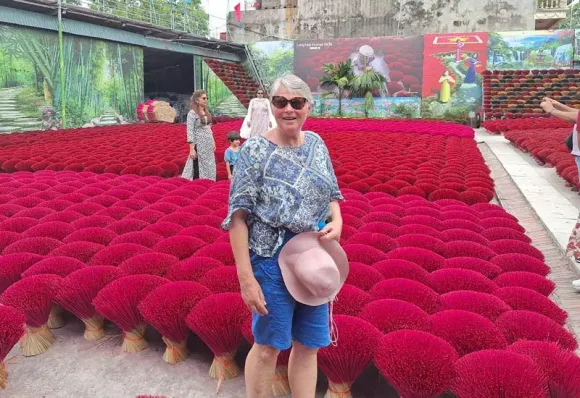
Hanoi Rural Craft Villages Tour