If you want to experience Vietnam beyond busy cities and well-known tourist attractions, Thai Hai Ecological Village offers an interesting introduction to the traditional culture of northern Vietnam. Located in Thai Nguyen Province, about 70 kilometers from Hanoi, the village combines traditional stilt houses, green landscapes, local cuisine and community-based tourism.
Thai Hai is particularly known for preserving the culture of the Tay ethnic community. In 2022, it was recognized by the United Nations World Tourism Organization (UNWTO) as one of the Best Tourism Villages, highlighting its approach to cultural preservation, local participation and sustainable tourism.
Thai Hai is located in Thai Nguyen Province, approximately 70 kilometers from Hanoi and around 10 kilometers from the center of Thai Nguyen. Its location makes it suitable for a day trip from Hanoi or as part of a longer Northern Vietnam itinerary.
The village is surrounded by trees, small hills, gardens and water areas, creating a green setting for visitors. It can also be combined with other attractions in Thai Nguyen, including the Tan Cuong tea-growing area and Nui Coc Lake.
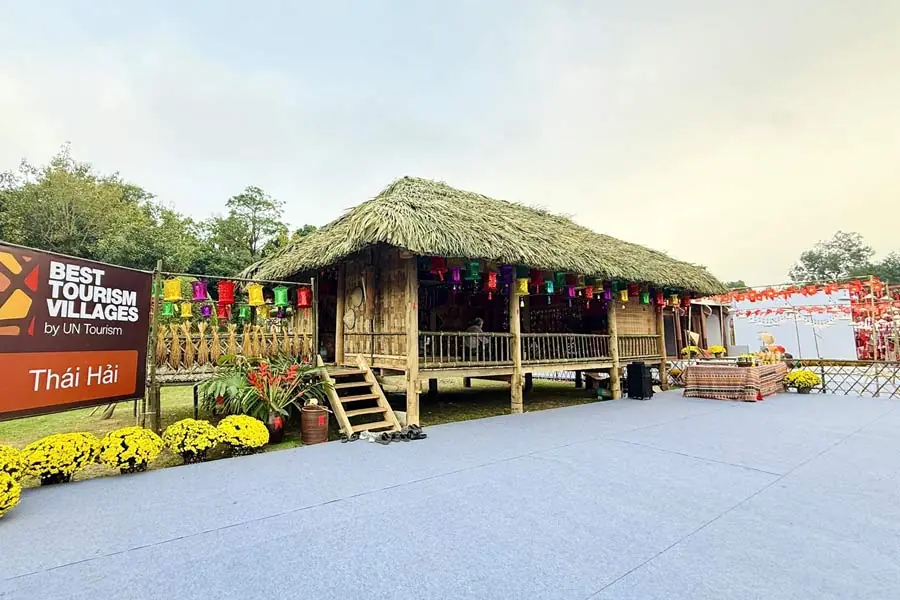
One of the first things visitors notice at Thai Hai is its collection of traditional Tay and Nung stilt houses. Around 30 traditional houses have been relocated from the Dinh Hoa area and restored as part of the village's cultural conservation project.
These houses are more than architectural displays. They form part of a living community where local residents preserve traditional customs, household objects, clothing, food and other elements of their cultural heritage.
Walking between the houses gives visitors an opportunity to see how traditional architecture fits naturally into the surrounding landscape.
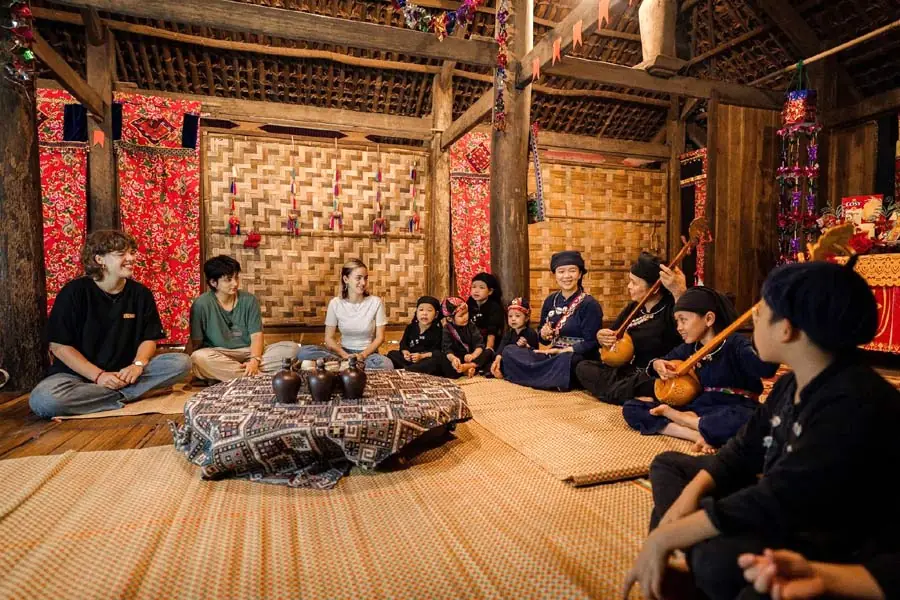
Culture is at the center of the Thai Hai experience. The community continues to preserve aspects of Tay language, customs, clothing, music, food and traditional ceremonies.
Visitors may have opportunities to listen to traditional music, see local crafts and learn about customs from residents themselves. Traditional Then singing, an important cultural expression of the Tay people, is also associated with the cultural activities of the village.
Rather than presenting culture only as a performance for visitors, Thai Hai aims to maintain it as part of everyday community life. This is one of the reasons the village has become an interesting example of community-based tourism in Vietnam.
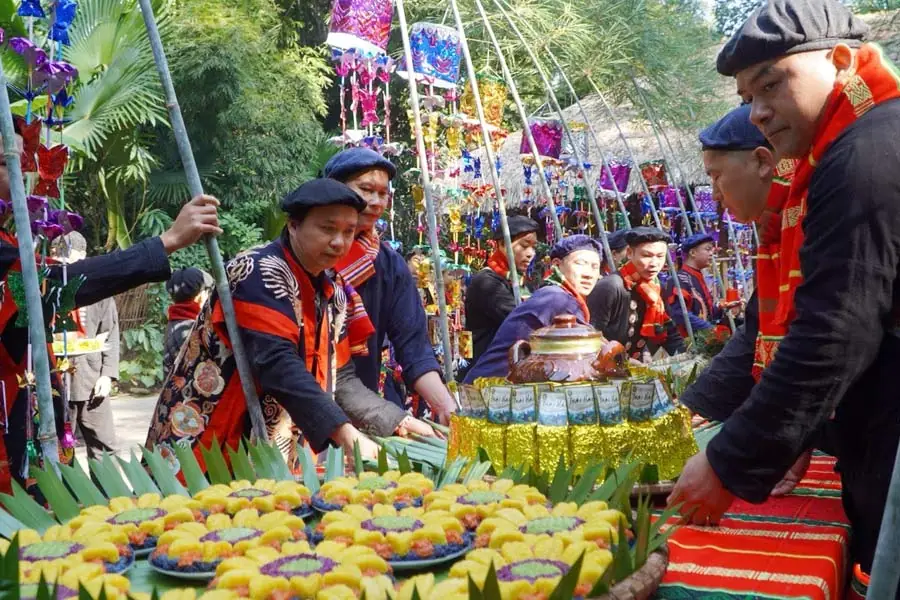
Food is another important part of a visit to Thai Hai. Local meals are prepared using ingredients commonly found in the surrounding countryside, including vegetables, rice and locally produced foods.
Traditional dishes provide visitors with a simple way to understand the local lifestyle and agricultural traditions. Depending on the experience arranged, travelers may also have the opportunity to learn about traditional food preparation and local specialties.
For travelers interested in Vietnamese cuisine, eating in a traditional stilt-house setting can be just as memorable as visiting the cultural attractions themselves.
Thai Hai also offers accommodation in traditional-style community houses, allowing visitors to extend their visit beyond a few hours.
Staying overnight gives travelers more time to experience the village after the main sightseeing activities have finished. It can be a good option for families, couples and small groups who prefer cultural experiences rather than conventional hotel accommodation.
The facilities are designed around the character of the traditional village, so visitors should expect a community-based experience rather than a luxury resort.
Although culture is the main attraction, Thai Hai also offers a pleasant natural environment. The village is set among trees, gardens, hills and water areas, with traditional houses distributed throughout the green landscape.
Visitors can walk around the village, photograph the architecture and observe local activities. The relatively compact setting makes it easy to explore without needing a complicated itinerary.
For families with children, the combination of open space, cultural activities and local experiences can also make Thai Hai an enjoyable alternative to a conventional sightseeing tour.
What makes Thai Hai particularly interesting is its community-based approach. Local residents participate in tourism activities while continuing to maintain their cultural traditions and everyday way of life.
The village has developed tourism around local knowledge, traditional houses, food, crafts and agricultural activities. UN Tourism highlights Thai Hai's efforts to preserve Tay culture while creating economic opportunities for the community.
This approach makes Thai Hai different from a conventional attraction where visitors simply arrive, take photographs and leave. The community itself is an important part of the experience.
Thai Hai can be visited throughout the year. However, the most comfortable periods for exploring the village are generally spring and autumn, when temperatures in northern Vietnam are more pleasant for outdoor activities.
The village can also be visited during cultural events and traditional celebrations, when travelers may have opportunities to see additional local customs and performances.
If you are planning a day trip from Hanoi, it is worth checking the village's current activities and arrangements in advance, particularly if you want to include a traditional meal, cultural performance or overnight stay.
Thai Hai is approximately 70 kilometers from Hanoi, making it considerably easier to reach than many of the mountain destinations in northern Vietnam.
A private car with a driver and tour guide is a convenient choice for families, couples and small groups. The journey normally takes around 1.5–2 hours, depending on traffic.
A private tour also makes it possible to combine Thai Hai with other attractions in Thai Nguyen. For example, travelers can visit a Tan Cuong tea plantation, explore Nui Coc Lake or continue toward other destinations in Northern Vietnam.
Most travelers can visit Thai Hai as a half-day or full-day experience from Hanoi. A half-day visit is suitable if you mainly want to see the stilt houses and learn about Tay culture.
A full-day itinerary provides more time for cultural activities, local food and nearby attractions.
If you enjoy community-based tourism and want a more immersive experience, consider staying overnight in a traditional stilt house. This allows you to experience the village beyond a standard sightseeing visit.
Thai Hai Ecological Village offers something different from the major tourist attractions around Hanoi. Its appeal comes from the combination of traditional architecture, Tay culture, local food, green surroundings and community life.
A visit allows travelers to step inside traditional stilt houses, meet local residents, taste regional food and learn how an ethnic community is working to preserve its heritage while welcoming visitors.
For travelers looking for an authentic cultural experience close to Hanoi, Thai Hai is an excellent addition to a Northern Vietnam itinerary. It can be visited independently as a day trip or combined with Thai Nguyen's tea culture and other destinations in the region.

12-Day Essential North Vietnam Tour
6-Day Northern Vietnam Nature & Heritage Tour

Authentic North Vietnam Tour 8 Days





 as one of the Best Tourism Villages, highlighting its approach to cultural preservation, local participation and sustainable tourism.&)